The throw-in comes quickly. Riley Falconer's teammate spots space on the edge of the box and goes for it, launching the ball toward Riley before the defense can get set.
What happens next takes about five seconds.
Riley didn’t try to bring the ball down. Instead, she flicked it over her own head and the defender behind her in one motion. The ball dropped. She took it past the next defender with her chest to find herself alone with the goalkeeper on the edge of the six-yard box.
The keeper charged. Riley struck it high, hard enough that even if it was aimed right above the keeper's head, there was no chance of a hand getting to it.
Goal. 5-0 to Ferrymead Bays FC.
Her teammates swarmed over for high-fives, then everyone jogged back to their own half. By this point in the match, they'd done this four times already, but this one was different.
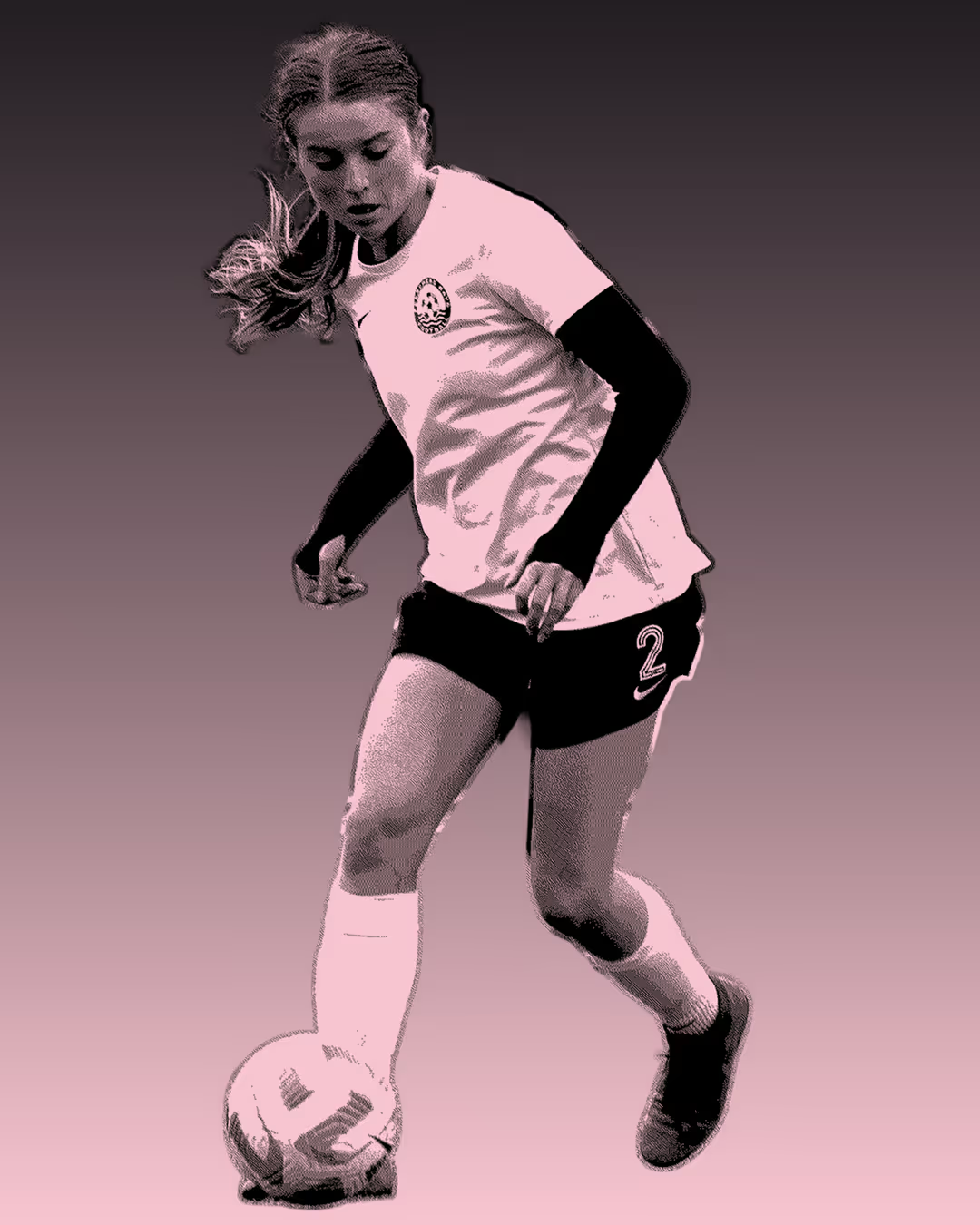
When the team tells you first
Riley didn't know her club had submitted the goal for this year's People's Puskas, which spotlights the best goals scored away from the biggest arenas.
"I was surprised when I found out," she says. "I'm really grateful to have such a great team and club."
The goal came in Ferrymead Bays' 5-0 win over Nomads-Waimak United in the New Zealand Women's Premiership. Riley's moment was the fifth, capping off what was already a dominant performance.

But watching it back, the goal itself isn't what stands out to her most.
"Seeing the team atmosphere in everyone's reactions afterwards is always a highlight," Riley says. "And the build-up towards the goals too."
The reaction tells you something about how this team operates. The calm celebration, everyone coming together before resetting for the next phase. The goal is spectacular, but the response is measured. Professional, even.
Space and timing
The goal works because Riley's teammate recognizes the space and Riley executes.
Riley's teammate sees the space before the defense does. The quick throw-in catches the defenders flat, creating the pocket Riley can exploit.
Then Riley has to actually do something with it.
The flick over her own head eliminates one defender. The chest control takes her past another. One-on-one, and the goalkeeper is charging.
"After I managed to get past the defenders, I just aimed to kick it high and hard enough that the keeper wouldn't get a hand on it, even if it was aimed right above her," Riley says.
Height and power over placement. That calculation happens in maybe half a second. Get it wrong, and the keeper saves it. Get it right, and you're running back to your own half with your teammates. Riley got it right.
Improvement through analysis
Ferrymead Bays have been recording their matches, giving the team a chance to study both their best moments and the times when things break down.
"For me, it's been so beneficial to have the Veo set up at our games. Being able to look back and watch the team's best moments and also the times where things have broken down have allowed us to improve throughout the season, and it gives us more perspective," Riley says.
That perspective matters in women's football, where resources for video analysis aren't always available at the semi-professional level. Players can see patterns they missed in real-time. The runs that create space. The defensive lapses that need fixing. The moments of individual brilliance that might otherwise exist only in memory.
Riley has watched her goal back since the match. She's also watched the others from Ferrymead Bays' season.
"I think it's really awesome being able to watch back all of our goals from the season," she says.
The moment and what comes after
Goals like Riley's are why People's Puskas exists. They happen in contexts where nobody's watching except the people who were there, but the quality is absolutely there. These goals can compete with anything you'll see in the biggest stadiums.
The technique is the same whether you're playing in New Zealand's Premiership or the Champions League final. The goalkeeper still charges. You still have to beat her. The execution still requires composure under pressure.
Riley had that composure. The goal went in. Her team won 5-0.
Now the goal has been submitted for People's Puskas, giving it a chance to be seen by people beyond Ferrymead Bays' usual audience.
"It's such a cool feeling," Riley says.
The submission places her goal alongside those of others from around the world. Grassroots players who produced moments of quality that might have gone unnoticed without someone capturing them and saying, this deserves to be seen.
What the goal says
Watch Riley's goal, and you see technical ability. The improvised flick, the chest control, the finish over the advancing keeper. You also see game intelligence.
The early throw-in only works if Riley recognizes the space exists and moves into it quickly enough. The flick only matters if she knows what to do next. The finish only succeeds if she calculates height and power correctly under pressure.

That's anything but luck. That's a player who understands the game and can execute when the moment arrives.
Ferrymead Bays were already 4-0 up when Riley scored. The match was probably won. She could have played it safe, taken an extra touch, looked for a pass. Instead, she went for the spectacular finish and pulled it off.
Riley's goal was the fifth and final one. The lob over the goalkeeper after beating two defenders. That's the one her club submitted.
That's the one that's now part of this year's People's Puskas. Now it's up to everyone else to see if they can beat that.